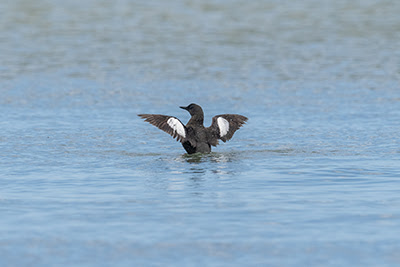
Nothing much else to report since the weekend although Groucho's simple I.D guide to rare birds in the NW has a new addition with a nice diagnostic mock up of Terek Sandpiper showing the key identification features.

 As well as the Wood Sandpiper there were a selection of other waders including Black-tailed Godwit, Redshank, 2 Common Sandpipers and a small flock of Dunlin. Watching a Heron struggle with a large Eel provided the comedy moment as the bird struggled to subdue its slimy prey and eventually dropped it in disgust.
 Not a good night for photography or driving - especially as the motorways seem full of numpties who haven't got a clue about lane discipline and force people to undertake as they're intent on hogging the middle lane( gripping the steering wheel and looking like frightened rabbits). Half our motorway congestion problems could be sorted out by giving lane hoggers a spot fine and 3 points.

Return wader passage is well under way and hopefully we'll dig out something interesting in Cheshire over the next few weeks
 Plenty of activity in the garden though with our Robins rearing a second breed in a new nest above the porch. This meant I could take photo's through the open window as they used a nearby birch tree and the fence as a staging post.
 Meanwhile the local pond has proved a safe haven for two more broods of residents.

 Highlight of a very quiet birding weekend was a singing male Reed Bunting about 400 m from the house - a local rarity. A flyover Peregrine didn't hang around much and a pair of Ravens caused panic amongst the hirundines at the nearby farm. At least the warm weather has brought an abundance of wild flowers and both Bee Orhids and Spotted Orchids are flowering along the railway embankment.

Stanney Woods is also very quiet with only the regular woodland species present. Warbler numbers have crashed over the years with only the odd pair of Chiffchaff and Blackcap present. Still, a walk in the coolness of the woods is a welcome relief during the heat wave and the smell of the wild honey suckle is certainly an improvement on the aroma experienced every morning in our temporary S African abode!


 The attraction of the Karoo were the endemic larks and other localised species and although seemingly birdless the area was actually teeming with life if you looked hard enough!
 Karoo Lark was one of the endemics we wanted to see and after several flight views one obliged right by the side of the road. other larks in the area included Thick-billed and Spike-heeled.


 Karoo Korhaan
 Chestnut-eared Warbler.
 Karoo Chat
 This area is supposedly one of the best in South Africa for the Cinnamon-breasted Warbler and the best way to find them is using a tape to call them in. We didn't have a tape and didn't know waht the call sounded like so failed dismally. We did find several new species for the tri plist though includsing Grey-winged Francolin, Long-billed Crombec, Proteas See-eater and Fairy Flycatcher whilst Cape Weaver and Grey-backed Cisticola made up a supporting cast.
  Finally we headed out of the Karoo and onto the tarmac roads around Ceres and spent the last few hours of daylight vainly searching for Black Harrier. A bird we failed to see and a good enough reason to return to S Africa in the future. Stopping and scanning at various locations we came across a flock of Cape Sparrows - the final photo opportunity of the trip.
A great trip with great company. What next? Suggestions of Patagonia to watch Killer Whales taking Seals off the beach have been mentioned. Meanwhile its back to more mundane June birding in the UK...................................


 This was the only site we also managed to connect with Cape Rock Thrush - a singing male and a much drabber female. Unfortunately we the local Black Eagles weren't playing ball but we caught up with them on the way to the Overberg grasslands.
 We wanted to visit the Overberg area to catch up with a few more endemics during our short stay. One of the target birds was Agulhas Lark and we were fortunate to see a single bird. Other good birds in this area included Blue Crane, Thick-billed Lark, Pearl-breasted & Saw-wing Swallow, Red-capped Lark, Karoo Korhaan, Crowned Plover and the first of many Jackal Buzards, Yellow Bishops & Southern Chanting Goshawk.

 Another long day but well worth the miles travelled. We were back in our favourite bar in time for Steak, Egg & Chips washed down with a few pints of Guinness before 20.00.