An early night last night was rudely disturbed by the mega alert going off. I knew what is was instantly. The possible Booted or Syke's Warbler in Northumberland had been positively identified as the rarer of the two recently split species. No point in going to sleep then and I lay waiting for the first calls..............
Having to go to work at least for a few hours I debated what to do until Pod Antrobus and Two Phones Et Al rang to say they were thinking of going. That made my mind up and we met around 12.45 in a layby off the M56 to start our long journey around the M62 and up the A1/M. We made excellent time and arrived around 3 hours later to find the bird showing well but active all the time as it flitted from bush to bush. Everyone kept a respectable distance but no one could complain of the views we got even if it was hard to photograph with the small Sigma.
Mike Stokes texted me to ask if I planned to go for the Syke's to which I replied I was actually watching it! Keep up Shropshire. You've got to move faster than that to match us Cheshire lot! As for the ASBO birders - not one in sight.
Although hardly staying still for more than a few seconds 'scope views were good enough to ascertain all the relevant identification features although the supercillium behind the eye looked a bit longer at times than that shown in Collin's! Still, better birders than me have seen the bird today and are happy with the identification.
Leaving site at around 17.30 we were safely home in Cheshire before it got dark. Another bogey bird off the hit list after the disappointment of missing one in Shetland by a matter of hours.
No. 460 BOU!
16 Aug 2010
15 Aug 2010
In the bag!
Friday afternoon saw gale force noorth westerlies on the N Wirral coast the 'Good Shepherd' offered to look after one of his flock and go seawatching off the Gunsites. Not much happened before the tide began to ebb but we did see a couple of Arctic Skua's, a handfull of Kittiwakes and a single Manx Shearwater.
A relatively high tide was crashing over the lower path below the embankment but despite the stormy conditions birds were few and far between.
Contrast Friday with Saturday when the weather was much warmer. Taking Molly to Frodsham and picking up Mark Payne enroute we checked No. 6 tank before driving round to No. 4 tank. A single Marsh Harrier was seen distantly over the score but by far the best bird was a juvenile Cuckoo. Leaving Frosham we checked the gulls out on a field adjacent to the Gowy tip where Groucho picked up the first of two juvenile Yellow-legged Gulls roosting on a recently harvested field adjacent to the road. From here we met up with one of Wirrals finest at Meols where there were two adult Med Gulls on the beach before the rising tide pushed them off. From here we checked out the groyne near the Leasowe Castle Hotel where a Greenshank roosted with the more usual wader species. Finally we ended up at Kings Gap to watch the waders coming back to feed as the tide receeded. A fly through 'unidentifed' brick red coloured wader was lost as it touched down but our intial identification as a possible Curlew Sandpiper was confirmed when we heard one had flown past Dove Point about 5 minutes earlier with a flock of Dunlin! Wader numbers are building up and we had a good number of superb summer plumaged Grey Plover and a juvenile Med Gull amongst the highlights.
Dropping Mark off for his train in Chester I decided to walk Molly along the canal towpath at Stoke making the most of the warm weather. Not much to see but at least the dog appreciated my efforts and the scenery is fantastic if you manage to ignore Shell Stanlow in the background.
A fall of migrnats on the east coast raised ourt hopes for Hilbre today. Awake early I walked Molly before leaving and logged a Tree Pipit flying over the house! A good sign. A very full Landrover (no room for Molly today) beat across the sand spilling some of its occupants out to walk Middle Eye as is the norm to check for any grounded migrants.
Hilbre from Middle Eye.
No sooner had we arrived at the Obs when I was greeted with a smiling group of ringers proffering a bird bag. Hmm. It was either something good they wanted me to ring or something really bad that would draw blood.
Luckily for me it was the former! As soon as I saw the bill I realised what it was and checking the hind claw confirmed it. A beautifully fresh young Tree Pipit. Checking the wing formula confirmed the identification and my day was off to a good start. Only about 10 have been ringed on Hilbre so it was a privelege for me to be able to ring this one. Thanks lads for cheering me up immensely after a difficult week.
As the weather became a bit hazy a small fall occured and soon after me asking John if Hilbre caught many autumn Grasshopper Warblers then Mr Jones proved he still has better hand eye coordination than any England goalkeeper in the World Cup and plucked one out of the SK.
Coupled with a few Willow Warblers and two Wheatears its another sign Autumn is definitely on the way.
A relatively high tide was crashing over the lower path below the embankment but despite the stormy conditions birds were few and far between.
Contrast Friday with Saturday when the weather was much warmer. Taking Molly to Frodsham and picking up Mark Payne enroute we checked No. 6 tank before driving round to No. 4 tank. A single Marsh Harrier was seen distantly over the score but by far the best bird was a juvenile Cuckoo. Leaving Frosham we checked the gulls out on a field adjacent to the Gowy tip where Groucho picked up the first of two juvenile Yellow-legged Gulls roosting on a recently harvested field adjacent to the road. From here we met up with one of Wirrals finest at Meols where there were two adult Med Gulls on the beach before the rising tide pushed them off. From here we checked out the groyne near the Leasowe Castle Hotel where a Greenshank roosted with the more usual wader species. Finally we ended up at Kings Gap to watch the waders coming back to feed as the tide receeded. A fly through 'unidentifed' brick red coloured wader was lost as it touched down but our intial identification as a possible Curlew Sandpiper was confirmed when we heard one had flown past Dove Point about 5 minutes earlier with a flock of Dunlin! Wader numbers are building up and we had a good number of superb summer plumaged Grey Plover and a juvenile Med Gull amongst the highlights.
Dropping Mark off for his train in Chester I decided to walk Molly along the canal towpath at Stoke making the most of the warm weather. Not much to see but at least the dog appreciated my efforts and the scenery is fantastic if you manage to ignore Shell Stanlow in the background.
A fall of migrnats on the east coast raised ourt hopes for Hilbre today. Awake early I walked Molly before leaving and logged a Tree Pipit flying over the house! A good sign. A very full Landrover (no room for Molly today) beat across the sand spilling some of its occupants out to walk Middle Eye as is the norm to check for any grounded migrants.
Hilbre from Middle Eye.
No sooner had we arrived at the Obs when I was greeted with a smiling group of ringers proffering a bird bag. Hmm. It was either something good they wanted me to ring or something really bad that would draw blood.
Luckily for me it was the former! As soon as I saw the bill I realised what it was and checking the hind claw confirmed it. A beautifully fresh young Tree Pipit. Checking the wing formula confirmed the identification and my day was off to a good start. Only about 10 have been ringed on Hilbre so it was a privelege for me to be able to ring this one. Thanks lads for cheering me up immensely after a difficult week.
As the weather became a bit hazy a small fall occured and soon after me asking John if Hilbre caught many autumn Grasshopper Warblers then Mr Jones proved he still has better hand eye coordination than any England goalkeeper in the World Cup and plucked one out of the SK.
Coupled with a few Willow Warblers and two Wheatears its another sign Autumn is definitely on the way.
9 Aug 2010
Another good day on Hilbre.
Managed another trip to Hilbre yesterday. An early morning yomp across the sands was in order and I arrived around 07.30 just in time for the first brew of the day! On the way past Middle Eye a Tree Pipit flew over calling and later a second bird was heard flying over Hilbre itself.
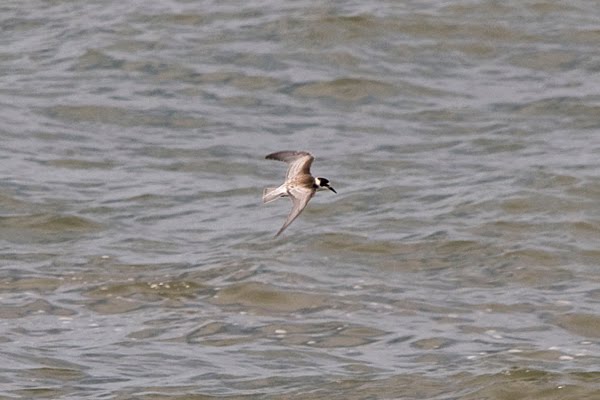
With a north westerly breeze not many migrants were expected but several Willow Warblers were caught and ringed but the focus of attention was once again on seabirds with the Black Tern still present and wader numbers continuing to build up. Suprsingly the Black Tern was frequently observed plunge diving for food at times beign completely submerged apart from its wing tips.
Its assciating with a group of Common Terns and seems to be copying their feeding behaviour!
The west side of the north end also provided good photo oppurtunitys for waders as a small group of Turnstone and Dunlin seem to favour this sheltered spot at high tide.
Who are you looking at?
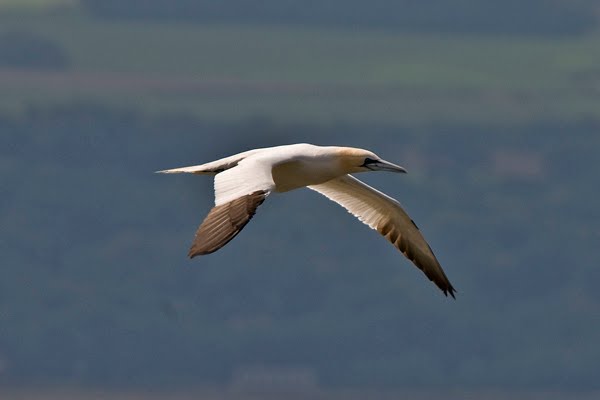
The smell of the Chairmans Hilbre special fried breakfast being cooked attracted not only the Obs members but a roving Gannet that made several passes right alongside the Observatory.
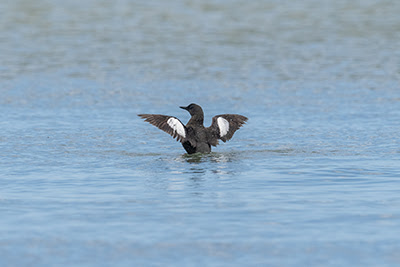
Once more Auks were scarce but we did manage to find a single Guillemot on the sea and a dead Razorbill on the beach. One lucky visitng birder picked up a juvenile Black-necked Grebe before it flew off towards the wind farm.
With a north westerly breeze not many migrants were expected but several Willow Warblers were caught and ringed but the focus of attention was once again on seabirds with the Black Tern still present and wader numbers continuing to build up. Suprsingly the Black Tern was frequently observed plunge diving for food at times beign completely submerged apart from its wing tips.
Its assciating with a group of Common Terns and seems to be copying their feeding behaviour!
The west side of the north end also provided good photo oppurtunitys for waders as a small group of Turnstone and Dunlin seem to favour this sheltered spot at high tide.
Who are you looking at?
The smell of the Chairmans Hilbre special fried breakfast being cooked attracted not only the Obs members but a roving Gannet that made several passes right alongside the Observatory.
Once more Auks were scarce but we did manage to find a single Guillemot on the sea and a dead Razorbill on the beach. One lucky visitng birder picked up a juvenile Black-necked Grebe before it flew off towards the wind farm.
6 Aug 2010
Autumn Migration!
Summers not offically over yet and already return migration is beginning on Hilbre. An early morning start saw the Obs crew bouncing across to the Island in the Landrover with a brisk south easterly breeze behind us. First things first for Kenny as he put the kettle on before we started our mornings work.
A small movement of passerines was evident with two Wheatears and a handful of Willow Warbers present. A single Blackbird and two unringed juvenile Pied Wagtails completed the count. Waders are returning in good numbers and it was great to see some juvenile Dunlin & Turnstone amongst them.
Amongst the Turnstones was this colour ringed bird returning after being first caught in the winter of 07/08. many of the Turnstones and Dunlin were still in breeding plumage.
Other waders included Redshank, Whimbrel, Curlew and Ringed Plover whilst a distant flypast Greenshank was a good find by 'South Easterly Jones'
Resident passerines seem to have fared well with juvenile Linnets and Meadow Pipits being caught and ringed.
Seabirds were present in good numbers with Manx Shearwaters and Gannets showing well off the north end. Once again we managed to moan a bird in - no sooner had someone moaned about the lack of Auks when we picked up a Razorbill splashing around in the waves. Other interest was provided by a juvenile Shag.
Star bird though was the Black Tern first found by Degsy yesterday and refound off the north end today amongst the feeding flock of Common & Sandwich Terns. A scarce bird this year in the N W - indeed the Country.
As the tide ebbed we drove off finding Little Egret, Peregrine & four stunning summer plumage Grey Plover on the way.
Aquick check of a largee Gull flock on fields adjacent to the Gowy tip earlier this week revealed an adult Yellow-legged Gull and a juvenile Med Gull amongst a flcok of 2-3,000 larids. Closer to home the local Moorhens are the proud parents of a third brood of youngsters. All the young from the first brood and most of those from the second brood have been chased off by the parent birds and this third brood consists of three chicks. I can't remember them ever having three broods before!
A small movement of passerines was evident with two Wheatears and a handful of Willow Warbers present. A single Blackbird and two unringed juvenile Pied Wagtails completed the count. Waders are returning in good numbers and it was great to see some juvenile Dunlin & Turnstone amongst them.
Amongst the Turnstones was this colour ringed bird returning after being first caught in the winter of 07/08. many of the Turnstones and Dunlin were still in breeding plumage.
Other waders included Redshank, Whimbrel, Curlew and Ringed Plover whilst a distant flypast Greenshank was a good find by 'South Easterly Jones'
Resident passerines seem to have fared well with juvenile Linnets and Meadow Pipits being caught and ringed.
Seabirds were present in good numbers with Manx Shearwaters and Gannets showing well off the north end. Once again we managed to moan a bird in - no sooner had someone moaned about the lack of Auks when we picked up a Razorbill splashing around in the waves. Other interest was provided by a juvenile Shag.
Star bird though was the Black Tern first found by Degsy yesterday and refound off the north end today amongst the feeding flock of Common & Sandwich Terns. A scarce bird this year in the N W - indeed the Country.
As the tide ebbed we drove off finding Little Egret, Peregrine & four stunning summer plumage Grey Plover on the way.
Aquick check of a largee Gull flock on fields adjacent to the Gowy tip earlier this week revealed an adult Yellow-legged Gull and a juvenile Med Gull amongst a flcok of 2-3,000 larids. Closer to home the local Moorhens are the proud parents of a third brood of youngsters. All the young from the first brood and most of those from the second brood have been chased off by the parent birds and this third brood consists of three chicks. I can't remember them ever having three broods before!
1 Aug 2010
Lesser Yellowlegs Inner Marsh Farm - a Wirral first.
A few months ago Mark Payne & I were looking at the plans of the proposed expansion at Inner Marsh Farm with Colin Wells the RSPB's Dee Estuary site manager and contemplating the arrival of an American Wader or two on the new scrape.
Fast forward to yesterday morning when I phonecall for Barry Barnacal alerted me to the presence of a possible Lesser Yellowlegs on the new scrape................. B*gger! I was still in Majorca enjoying the last day of our holiday. Lesser Yellowlegs was not only a Wirral first but a County first for me as well.
Luckily the bird was still there this morning albeit distant. There was some initial confusion with some latecomers confusing a Ruff with the Yellowlegs but eventually the small group of birders all got onto it.
However, something spooked the Lapwings and the whole flock flew with the Yellowlegs heading towards No. 2 pool infront of the hide. Being quick off the mark I was the first one into the hide and relocated it at the back of the pool. Closer but still not really photographable.
Lesser Yellowlegs with Ruff.
Lesser Yellowlegs with Starling.
News from Saltney is the owner of the Purple Swamphen has turned up to try and recapture it with a fishing net. He claims to have two paairs and lives a few streets away. This is the female of a pair that escaped a few weeks ago. The male gave itself up a couple of days later but the female remained on the loose. Maybe its genuine but it sounds a bit dodgy to me. If he lives so close why has he left it three weeks to try and recapture the bird when all the locals we saw this morning say its been present for at least three weeks? Its currently evading capture and there's a group of birders cheering it on.. Maybe someone should contact the guy and ask him why they're not close ringed.
Fast forward to yesterday morning when I phonecall for Barry Barnacal alerted me to the presence of a possible Lesser Yellowlegs on the new scrape................. B*gger! I was still in Majorca enjoying the last day of our holiday. Lesser Yellowlegs was not only a Wirral first but a County first for me as well.
Luckily the bird was still there this morning albeit distant. There was some initial confusion with some latecomers confusing a Ruff with the Yellowlegs but eventually the small group of birders all got onto it.
However, something spooked the Lapwings and the whole flock flew with the Yellowlegs heading towards No. 2 pool infront of the hide. Being quick off the mark I was the first one into the hide and relocated it at the back of the pool. Closer but still not really photographable.
Lesser Yellowlegs with Starling.
News from Saltney is the owner of the Purple Swamphen has turned up to try and recapture it with a fishing net. He claims to have two paairs and lives a few streets away. This is the female of a pair that escaped a few weeks ago. The male gave itself up a couple of days later but the female remained on the loose. Maybe its genuine but it sounds a bit dodgy to me. If he lives so close why has he left it three weeks to try and recapture the bird when all the locals we saw this morning say its been present for at least three weeks? Its currently evading capture and there's a group of birders cheering it on.. Maybe someone should contact the guy and ask him why they're not close ringed.
Another stunning rail.
I was on the last day of a Majorcan holiday when a message from Malc Curtin alerted me to the presence of a Purple Gallinu or Swamphen in nearby Saltney. Relaying the message to the Wirral birders I sat back and relaxed with another beer until a text from Al Conlin infomred me he'd seen the bird and had identified it as the Eastern race. This sounded interesting.
Unable to sleep I was up early this morning and crept out of the house to drive the short journey to Saltney where only 3 -4 other people were already present. Sure enough the bird was there, dwarfing the local Moorhens and behaving like a wild bird - pulling down grass and reed stems to eat the seeds and occasionally chasing off the Moorhens. We also saw it in flight! The plumage is immaculate. Where ever its come from its a stunning if not incongruous site on a small stream opposite a Morrison's supermarket.
23 Jul 2010
Somewhere on the Wirral..............................
......................lurks this beauty. Just as well it wasn't in off the sea otherwise someone would be claiming Snowy Sheathbill! A stunning looking bird and well worth the effort to go and see it. I've never seen a completely leucistic Moorhen before. Extremely wary and shy and pprobably for good reason.
Subscribe to:
Posts
(
Atom
)