Pages

28 Feb 2022

On me Meds

Mediterranean Gulls only started breeding in the UK 60 years ago and have gradually been expanding their range northwards. It seems like only a few years ago that they were still rare in Cheshire but now they're firmly established as a scarce breeder. 

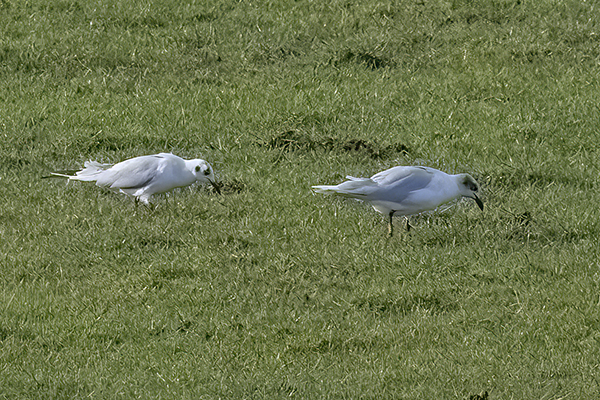
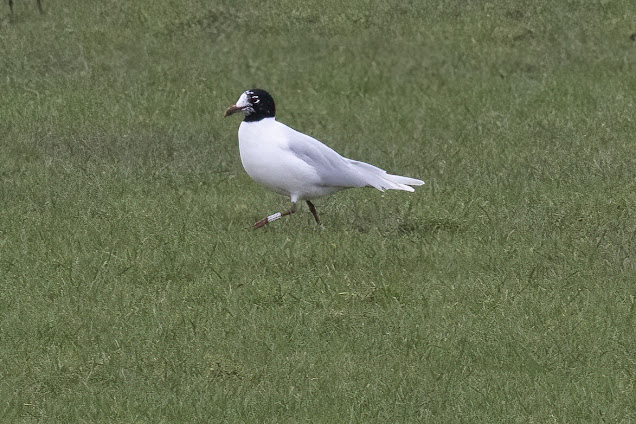
The wet pastures around the village attract good numbers of gulls during spring and autumn and since we moved here in 2016 Mediterranean Gulls have bee nan annual occurrence among the throngs of Black-headed Gulls. Even so this year has been exceptional with at least three different birds seen feeding on earthworms. I know theres at least three as one has a red darvic, one a white darvic and one is unringed! All three are adults and unfortunately I've not been able to read the engravings pn the rings. A shame as I doubt they'll have been ringed in Cheshire! 

Below is a short video of one of the birds followed by a couple of still photos of the red and white darvic ringed birds.


Red darvic ringed Med Gull

White darvic ringed Med Gull

Below is another short video of the unringed bird:

As far as bird days go this year has been the best I've had since we moved here with seven days when I've seen Mediterranean Gull from the comfort of the house! 


20 Feb 2022

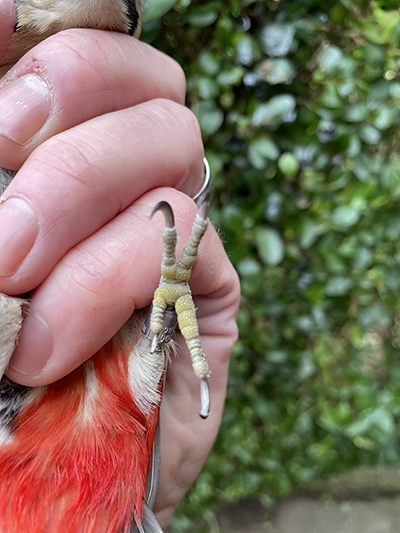
Zygodactylous feet

 Most perching birds have three forward facing toes and one rear facing toes - so called anisodactyl feet. Some species such as owls, woodpeckers, cuckoos and parrots have what is termed zygodactyl feet where two toes face forward and two toes face backwards. In the case of woodpeckers it helps them grip when climbing and with owls it helps holding prey whilst in parrots it gives them a huge amount of dexterity when holding and eating food. As a ringer the commonest  zygodactyl feet  I see is in the Greater Spotted Woodpecker such as this bird in the photo below. This adaptation, along with their stiff tail feathers makes then perfectly adapted to climbing tree trunks.

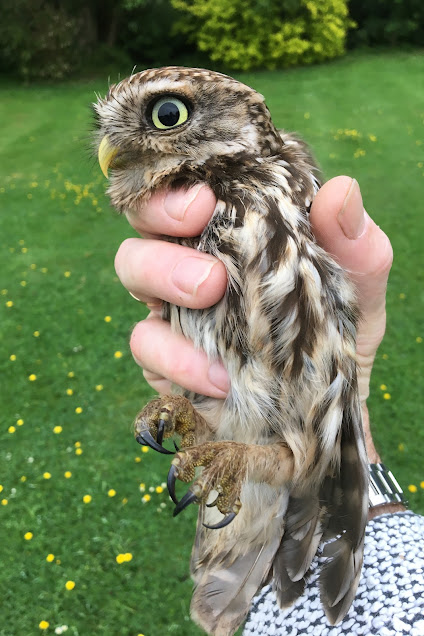
I've also been lucky enough to ring a few Owls and the same arrangement of two forward and two rear facing toes can be seen in the photo of a Little Owl ringed in our garden below. ou can see from the talons how this adaptation allows them to grip prey. With two forward and two rear facing talons imbedded in flesh an unfortunate rodent is unlikely to escape


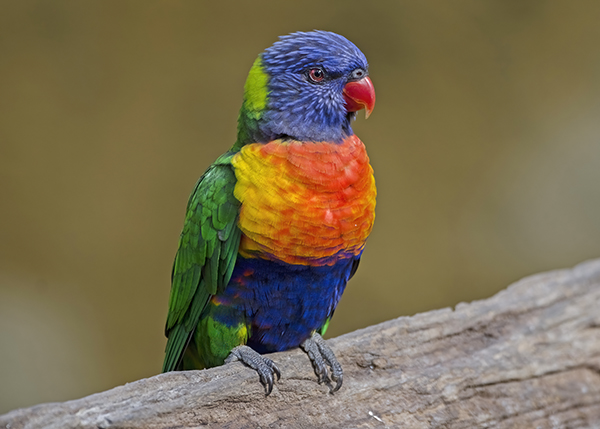
Although I've not been fortunate enough to ring any parrots on any of my Australian trips I've managed to photograph a few but very few of the photographs show the toe arrangement. I manage to find one of a Rainbow Lorikeet I photographed in Merimbula a few years ago that shows two forward facing toes but not the two rear ones! 

Swifts have pamprodactyl feet where all four toes face forwards. This adaptation allows them to cling to vertical surfaces to roost.

Its incredible how different families of birds have evolved to have different arrangements of toes suited to their lifestyle and feeding behaviour. 


15 Feb 2022

Snow Goose on the house list.

A few years ago Barry Barnacal found a Snow Goose on the Wirral that arrived and departed with Pinkfooted Geese - see here for details on that bird. Roll on early February 2022 and another turned up in the same location with Pinkfooted Geese. Given geese can live for many years was it a returning bird? I couldn't get to see it when it first arrived and after a bit of sleuthing I found out the 2018 bird hadn't been submitted and wasn't recorded in either the county bird report for that year or the county rarities database - despite photos of the bird being all over social media it wasn't deemed worthy of a record as a rarities form hadn't been submitted! It's now been added to the county data base..........

Heres a short video I took off that bird. It arrived with Pinkfeet and left a few days later so theres no reason to think it wasn't a genuinely wild bird

I had this mad idea that, given the numbers of Pinkfeet that fly over our house, I may get it on the house list! Sometimes the most seemingly mad ideas come to fruition. The bird seemed settled on wet fields at Burton Mere Wetlands RSPB which is about 8 km in a straight line from me. It occasionally took flight with the rest of the geese and at times was reported heading towards chester before circling round and returning back. 

With huge skeins of geese suddenly flying round and coming close to us before circling back towards the Dee surely I'd be able to pick it out. Sure enough after two days of watching and waiting I picked it up distantly with Pinkfeet before it dropped below the tree line and onto Burton Marsh. What a house tick! 

Hearing from Steve it was showing off Burton Point and having arranged to meet my old friend Andy at Parkgate later I decided to leave earlier and meet up with Steve and Colin for a quick look.

It was easy enough to spot although distant and with a supporting cast of two Barnacle Geese, three whooper swans and a calling Cetti's warbler it was a great little trip out. Coupled with a Titanic Plum Porter at the nearby Harp the day got even better! 

With a large feral breeding population on the near continent the status of Snow Geese in the UK is always going to be difficult to determine. Its no longer a BBRC rarity and is now considered by county rarities committees. Unless someone finds a ringed bird and manages to read the ring number from Canada you're never going to know the true origin but the fact the two cheshire records have both arrived and departed with Pinkfeet surely strengthens their credentials as a wild bird.

6 Feb 2022

Old friends and old haunts.

One of the first people I met when  I started at Manchester University was Andy Swash. I vividly remember sitting in the bar with Andy one Friday evening, soon after I'd joined the bird club at freshers week at Owens Park students residence when in rushed a highly excited Paul Jepson with news of an Arctic Warbler in Hartlepool cemetery. At that time they were a really rare bird in the UK.  The conversation went something like this:

'Andy theres an Arctic Warbler at hartlepool cemetery. I'm leaving tonight to get there for first light. Are you coming'

Followed by: 'who are you'

Introduction from Andy.

'Are you coming as well'

'Umm,yes! "

Four of us crammed into Pauls VW Beetle and duly arrived outside the locked cemetery gates at stupid O'clock the following morning. Three of us settled down in the Beetle to get whatever sleep we could and Paul slept in a sleeping bag alongside the car in the gutter...........

We didn't get any rest. A nearby dog kept us awake all night. A voice from the gutter uttered the immortal words we were all thinking:

'Can't somebody kick that f***ing dog in the b*ll*cks!'

Sometime after a council official came and unlocked the gates and I was soon watching my 1st Arctic Warbler. I seem to recall seeing my 1st Yellow-browed Warbler the same year.

After that introduction I soon became a regular member of the twitching team and another trip took us to Tregaron Bog in mid-Wales which, at the time, was the only place to see Red Kite in the whole of the UK! How times have changed! Another trip took us to Falmouth Bay for Forsters Tern while another saw us at Loch Ryan for King Eider! A longer trip took me to Vorran Island, South Uist for a long staying male Stellers Eider that eventually stayed for 12 years!

We also took regular planned trips to Suffolk, Scotland and Wales for birding weekends with the Manchester University Bird Club. Roll forward to the end of 1981 and Andy, who was a year above me, graduated and moved away. I graduated a year later and moved abroad and so we lost contact. We finally met again at one of our old University lecturers, Dr Mike Hounsomes, funeral in Devon about 5 years ago

Thanks to local birder Steve Holmes, who's been friends with Andy for many years, we finally got to meet up and go birding again. 41 years after the last time! 

We met at Parkgate on a cold and blustery day made all the more bearable by a fabulous display fro mthe wintering raptors on site. Fly by sub adult male Hen Harrier, Marsh Harrier, Peregrine, Merlin and Short -eared Owl were the highlights but large numbers of Pinkfooted geese whiffling down to settle on the flashes in front of us and several Great White Egrets were a close second. Along with the biggest flock of Lapwings  (probably 2,500+ )  that I've seen for many years it was a great few hours birding and reminiscing.

sub adult male Hen Harrier

female Marsh Harrier

Pinkfeet

Short-eared Owl


Andy's career path took a different direction to mine and he's now a successful author with a number of books to his name. I was really touched when he presented me with a copy of his latest book complete with a lovely inscription in the front.


After so many years it was great to catch up and hopefully well have many more birding trips together in the future.

31 Jan 2022

Another successful SCAN canon netting session

My 2nd outing of 2022 took place at the weekend with the target species being Turnstone at Rhos - on - sea. Because of the early tide the nets were set the night before but it ass still only half light when we met up at our designated meeting point to be briefed on the days plans and assigned our different roles. It was, once again great to see some old friends, and catch up with some I hadn't seen for several years!  

Early morning view from the prom at Rhos.

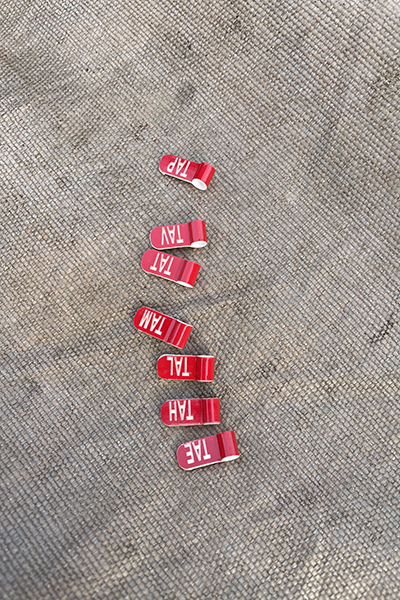
As the tide rose so did expectations as the birds began to move into the catching areas. Some deft 'twinkling' and we were ready to make a catch. The target species was Turnstone and we were fitting each one with an individually marked coloured leg flag above the tarsus and a colour ring below. On a previous trip, in March 2020 we'd fitted a small number of data loggers and the recovery and subsequent analysis of the data will provide valuable information on these birds movements and where they breed as well as migration routes and staging posts. All extremely useful conservation tools. See here for information on that catch).

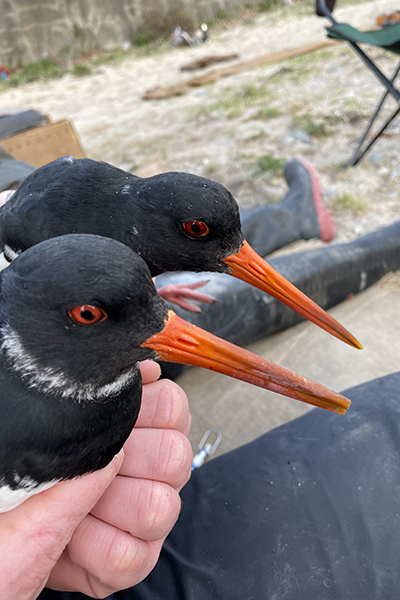
In the end we caught 46 Turnstone with a few Dunlin, Oystercatchers and Redshank for good measure. Once again I'm always amazed by the difference in shapes of Oystercatcher bills. They exhibit both resource polymorphism, where the bill shape can actually change to take advantage of different food resources, and sexual dimorphism where the bill shape / size is different between males and females. The bill shapes are generally described as being a 'priser' or a 'hammer'. Prisers use their more pointed bill to prise open bivalve molluscs or extract worms from a soft substrate whilst hammerers are a blunt instrument that actually breaks open the shell. I suppose I can relate to that! The photo below of two adult (Euring 8) illustrates this perfectly. The situation is slighlty confusing as males generally have shorter and deeper bills than females but you can find a short billed 'priser' or a longer billed 'hammerer'. Its a great adaptation allowing birds to utilise different food resources.


Once we'd processed the other species attention turned to the Turnstone. Each one was metal ringed above the tarsus before being fitted with a unique red flag with a three letter code on the opposite leg with a coloured 'marker' ring below.

 Each bird is then 'processed' where its age is confirmed, wing, total head and bill length and weight recorded along with its ring number and the flag letters.


As with many other wader species ageing Turnstone can be done on the presence or otherwise of buff tips to the retained juvenile inner median coverts - if they haven't all worn off by this time.
Photos below show an adult (Euring 6 - born before last year) and a 1st winter Euring 5 (born last year).

Turnstone Euring 6

Turnstone Euring 5

Another great day and I was back home by lunchtime! Just as well as I forgot to take the snadwiches I'd made up the previous night! 


23 Jan 2022

Dunlin

 The 1st SCAN canon netting session of the year took place Saturday and the target species were Dunlin. A previous recce, by Tom, had found good numbers roosting over the high tide just outside Beaumaris, Anglesey. Meeting at 08.15 to load the huge amount of gear required for a canon netting session we were soon heading across the Menai Strait  via Robert Stephensons Britannia Bridge to meet up with the rest of the team.

Two small mesh nets were set about 100 metres apart as the sunrise above the surrounding hills. A glorious sight as the suns rays broke through the low cloud and illuminated the hillsides as they drop down to the sea.


Once the nets were set the long wait commenced. Some of the team went off looking for Brent Geese colour rings to read whilst the rest of us hung around the vehicles chatting until it was time to start moving into our designated positions. The spotting & firing team moved to where they could observe the nets and fire when birds were in the right position and it was safe to fire. Backstops were sent to either end of the beach to advise any members of the public what was happening whilst the rest of us (the lifting team) settled down to wait. 

The lifting team usually can’t  see the catching area so we’re kept updated of what was happening via walkie-talkie radio.  It’s always a tense time. Are the nets in the right place? Will the birds turn up? Will something disturb the birds before we can fire the nets? ( usually a Peregrine!).

As the tide rose small numbers of Dunlin started moving onto the beach but not the large numbers seen during the recce. Nerves start setting in properly at this stage but a radio message from Steve saying another 400 Dunlin had arrived filled us with a bit more optimism. Unfortunately the birds weren’t  in the right area so Claire was sent to do a bit of ‘twinkling’ to try and slowly and calmly  get the birds to move slightly so they were in an area where we could catch them and, very importantly where it was safe to make the catch.

With radio instructions from Steve, who was watching from the firing position, she did this to great effect and soon we got the message that Steve was arming the firing box followed by the count down from three and suddenly we were up and running as the nets were fired. 

The lifting team were first to their designated positions and the net was lifted away from the edge of the rising tide before the birds were covered with hessian coverings to keep them calm before being extracted and placed into keeping ready for ringing and processing. The birds would be roosting over high tide and wouldn’t be feeding anyway so keeping them dark, warm & calm in keeping cages isn’t taking up valuable feeding time during these short winter days. 

Keeping cages 

Small mesh net drying on the beach whilst birds are processed

It turned out to be a good catch with 1333 Dunlin (930 new birds and 403 retrap) processed along with 8 Ringed Plover and 2 Turnstone. The Ringed Plover and Turnstone were colour flagged as part of other long term monitoring projects. The Dunlin catch included a few foreign controls as well as at least two colour ringed birds from central Wales. Foreign controls included 4 from Sweden, 1from Poland and one from Norway! 
Polish control

The size of the catch gave a number of trainees plenty of experience in ringing as well as ageing - Dunlin are fairly easy to age as juveniles have buff tipped coverts whilst adults are all white. Occasionally there’s a bird that has retained some juvenile feathers as well as having adult type and these can be more precisely aged. The majority of adults were aged as Euring 6 meaning they were are in at least their third calendar year. The juveniles were all Euring 5 being in their second calendar year and fledged last year. We had one bird that we could age as Euring 7 meaning it definitely was definitely in its third calendar year having fledged in 2020.

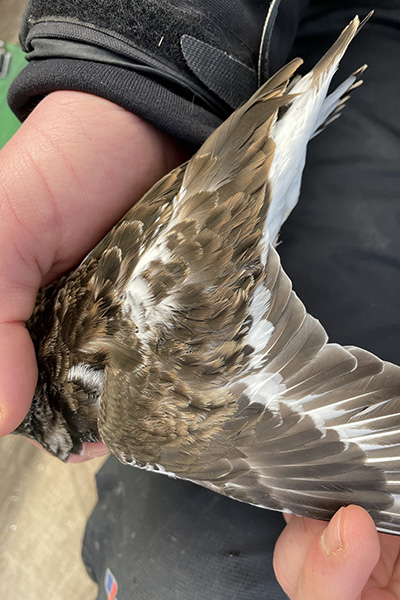
Photo below shows a good comparison between adult and juvenile Dunlin wings with the adult being the top bird.

Adult Dunlin above, juvenile below
Dunlin Euring 7
The Ringed Plover and Turnstone were all colour flagged as part of other long term monitoring projects being carried out by SCAN. Colour ringing / flagging is a great study tool as it allows birders to report birds seen in the field whereas as a metal ring on such small birds are virtually impossible to read in the field. This provides even more data for researchers to work with.


Above & below: 2 colour ringed Dunlin from a project in mid-Wales controlled by SCAN


A very long & tiring day but thoroughly enjoyable. I left home in the dark and got home in the dark! 

31 Dec 2021

2021 done and dusted!

I think everyone will be glad to see the back of 2021. Covid 19 lockdowns meant many peoples plans were severely disrupted and many of our plans were put on the back-burner! I managed 4 new species for the year taking my life list up to 531- new birds were Northern Mockingbird, Red-necked Stint and Belted Kingfisher! the 4th was an 'armchair tick' with the long overdue addition of Ross's Goose to the British list. Unfortunately I missed some really good birds by being either to slow off the mark or away! Sulphur-bellied Warbler was one such bird where I dithered about going incase  I couldn't get a boat to Lundy. Hindsights a wonderful thing and in retrospect I should have just gone as there were apparently plenty of seats available on various charter boats. I can't really complain at missing the Varied Thrush on Papa Westray as I was in the Maldives belatedly celebrating my 60th birthday trip that had been rescheduled from the beginning of the year. I ticked two of my most wanted of my all time bucket list on that trip - diving with Manta Rays and best of all Whale Shark!

Most of my birding these days is done within walking distance of our house. Unless I'm twitching something thats where  I prefer to be. An exception to this is our annual trip to Shetland (see write up here). I consider Shetland as my home from home and look forward to our annual sojourn every year. By no means a classic year but good company and we did find a few good birds.

The local patch is mainly improved pasture with some arable and a few ponds - one of which is conveniently opposite my study window and has my telescope trained on it most of the time! It has turned up some good birds and this year I added three new species to the house / patch list (all three were seen from the house!) - Red Kite, Cattle Egret & Goshawk! Looks like I'll have to submit a couple of county rarities forms! Another local highlight was the successful breeding of our local Little Owls. They hadn't bred successfully for three years since the original female was killed by a Sparrowhawk in our garden.

Ringing been a major part of my birding year with regular trips out with SCAN canon netting waders and ringing seabirds on Puffin Island. I didn't get to Hilbre as much as I'd like this year due to various other issues we've had at home but hopefully I'll get across more in 2022. I was on the island when the Melodious Warbler was trapped and ringed and that was a nice addition to my county & Hilbre lists! (see here)

Another highlight was a June trip to Shetland with some good mates. We didn't see the hoped for Orca but didn't do to badly! - see here. Breeding Red-necked Phalaropes and an adult Long-tailed Skua holding territory were pretty good. Coupled with an adult male Snowy Owl on Ronas Hill and some good company it was  memorable trip.

One of the major highlights of my year was undoubtedly my first trip to Bardsey with Chris to help install the Observatories solar system. A steep learning curve for me! Steve and Emma looked after us extremely well and we even got to ring some Manx Shearwaters and Storm Petrels. A write up on that trip can be read here). A fabulous place and I really don't know why I hadn't been across before.

So, what will 2022 bring? Hopefully we'll all be free of Covid19 and its various mutations. As parents of an Australian citizen we've got a special permit to enter the country and hope to go in February. Amy & Jeremy have bought us a hot air ballon flight as a Christmas present. Taking off from one of the local wineries and then landing for a champagne breakfast somewhere! Another one off the bucket list of things to do before I become too decrepit. Another bird on my all time wanted list is the Australian Regents Honeyeater and their new house is in one of the hot spots for this rapidly declining species. It will be looking like the needle in the proverbial haystack though with an estimated 300 birds left in an area the size of the British Isles! 

Again, we're hoping that a delayed trip to Africa will come off later in the year with a week on safari in the Masai Mara and a week in Zanzibar. I've already booked our accommodation on Fetlar in October and it'll be my 15th consecutive autumn on Shetland.

Heres wishing all my friends and family a Covid free and happy  new year. I'll see you all on the other side.