Pages

31 Oct 2016

Fair Isle 2016. Part 3.

One of the features of Fair Isle is how remarkably tame some of the migrant birds are - most of them will probably never have seen humans before. We were lucky that our trip coincided with the arrival of good numbers of geese and at one stage we were able to compare Pinkfeet, Tundra bean and Eurasian Whitefronts in the same field from less than 100 m away.

 Tundra Bean Goose.
 Tundra Beans with Pinkfeet.
Eurasian Whitefronted Goose.

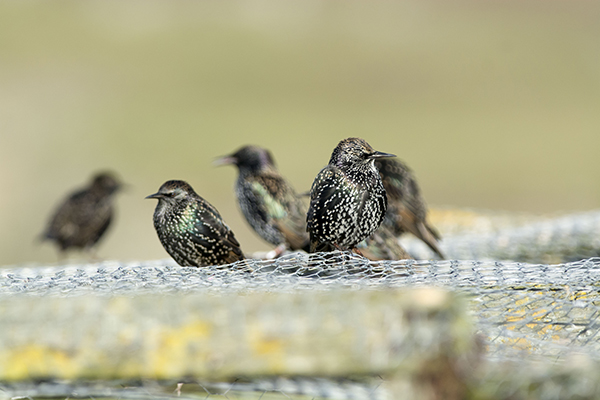
Another feature is the number of Starlings and House Sparrows still present on the island. The resident Starlings are a distinct race (zetlandicus) but numbers are boosted by continental migrants in the winter. House Sparrows are really common - unlike near where we live. The crofting agricultural techniques and grazing land suit there requirements.



The scenery is fabulous and on a sunny day there is probably no more beautiful place in the British Isles. Towering cliffs and geos, moorland, pasture land and small crofts......


As well as rare birds it was nice to catch up with a few scarcer birds we don't often see in Cheshire. Whilst we were on Fair Isle at least one and possibly two Great-grey Shrikes were present with one being ringed whilst we were there and a second one the day after we left.

During our stay there was also a small influx of Shorelarks - a scarce bird on Fair Isle but even scarcer on Fair Isle as AW, Lee Gregory, needed it for his Fair Isle list!



26 Oct 2016

Fair Isle 2016. Part 2

Where to begin? With so much good habitat to search on foot we were at a quandry as to where to start. Mornings saw me getting up early to join the early trap rounds and spend time in the ringing room before joining the others for breakfast in the Obs. Wit ha good cooked breakfast inside us and a rucksack packed with lunch we spent the whole day in the field searching geo's, ditches and abandoned crofts! Although not spectacularly successful we did pretty well with a new Olive-backed Pipit and a Siberian Stonechat (Chris - and a different bird to the possible stejgeners found by Kieran a few days later).  The long staying Pechora Pipit eventually gave good views with a bit of patience as did the Olive-backed Pipit in Shirva thistles. This last site constantly turned up good birds and along with the OBP there were always  1-2 Little Buntings and Lapland Buntings.

 Above: Lapland Bunting

 Above: Little Bunting


Above: Olive-backed skulking Pipit


Above: Pechora Pipit.

Birding the geo's is always fun and not for those afraid of heights!


 Fred birding a geo.
 Fred missed Strictly Come Dancing so decided to improvise with South Light in the background.
 Mark & Fred peering into  a geo

The scenery is stunning and with good numbers of commoner migrants as well as a sprinkling or rarities / scarcities there was enough to keep us entertained even though the weather was occasionally 'challenging'. Everyone is very friendly towards birders and even the local rams like to be made a fuss of and come running up to the fences to have their heads scratched.
A feature of the bird life on this trip was the number of Common Redpolls that turned up with some really big white looking birds and some very smart males with pink on the breast.

24 Oct 2016

Fair Isle 2016. Part 1

After an enjoyable change from our usual autumn trip to Shetland in 2015, when we went to Fair Isle, we decided to do the same this year! Consequently Mark P, Chris G F Fearn and myself found ourselves at Tingwall airport for the short flight to Fair Isle on the 13th October.

Being met by the Obs warden, David Parnaby, the first priority was to go down the island to Deryck Shaw's place where a Pine Bunting had been hanging out feeding with House Sparrows, Yellowhammers and Brambling. This was a lifer for Chris and Mark and neither Fred or I had seen one for quite awhile. David kindly dropped us off and took our bags back to the Obs.

Sure enough it wasn't long before the female Pine Bunting shoed itself on Derycks drive.


A couple of days later we were lucky enough to be close to Derycks when he caught and ringed it so we had the opportunity to see it in the hand. I also had the chance of ringing a couple of Bramblings that Deryck had caught at the same time.


Unbelievably a few days later a 2nd Pine Bunting was found and then a 3rd.


Although not really a ringing trip I was able to do some ringing at the Obs - most of the birds were the more common migrants expected at this time of year and included Blackcaps, Bramblings, Redpools, thrushes, Robins, Chiffchaffs and Goldcrests but I was fortunate enough to ring a few new species! Including this beautiful female Hawfinch and a Woodcock!


Above: Water Rail caught and ringed.


 Above: Waxwing caught and ringed.
Above: Long-tailed Duck caught and ringed.


11 Oct 2016

Cosmic mind blowing accentor.

When the RBA mega alert went off a few days ago I was busy up to my elbows in concrete so I didn't pay it more than a passing glance - 'Alpine Accentor, Shetland...'  At least thats what I read it as. It was only when Fred texted me to see if  I was interested in flying up with him that I realised what it actually said was SIBERIAN ACCENTOR! A first for Britain no less but widely prophesied by the wisemen and keyboard warriors. This was one bird  I really wanted to see so rapid arrangements were formalised and  I met up with Fred, Malc and Simon in a dodgy lay-by just off the M6 at 05.00 and drove us to the airfield.

With a clear night forecast on Shetland none of us were really confident the bird would still be there but 'who dares wins Rodney' and all that - we had to try! At least we didn't have to get on the plane if the bird wasn't still there. We'd stopped for a pee and a brew when the news came through just after daylight the bird was, against all expectations, still there so we phoned through for a hire car at Sumburgh airport and boarded our plane.......... For those who know me well I'll tell you the story of the flight when we meet up but suffice to say it was reasonably 'eventful'.

On the way up we had spectacular views of the British countryside and passed close to Fair Isle where I'll be taking up temporary residence for a week in the not to distant future.


Landing safely and somewhat relieved at Sumburgh we all dashed to the loo and then picked up our hire car for the short drive to where the star of the trip had taken up temporary residence. As we drove up we saw people moving towards us and it had transpired the bird had flown from one quarry to the one we were right next to. A quick reverse into a parking spot by Fred and we were soon watching this stunning little Siberian gem from the edge of its favoured quarry as it fed on insects in the sunshine.

What a fabulous spot and a fabulous bird.


Now some pics of the star of the show:


With time pressing we reluctantly left and headed back to the airport via a Buff-breasted Sandpiper that had turned up in a field with a flock of Golden Plover. The journey home wasn't as eventful as the outward journey and we enjoyed a beautiful sunset. I eventually got home, knackered but happy, around 8.30 pm.

3 Oct 2016

Newts and the beginnings of a new garden list.

Noot much birding or ringing for me over the last couple of weeks as we start the renovation work on our new house! First job was to replace the old rotten shed with a new one and in doing so we found these small newts beneath one of the rotten floor panels. Smooth newts?


As there is no pond in the garden they must have come from one of the ponds in the adjacent fields. These ponds are also home to Coot & Moorhen which can be seen from one of the upstairs windows.

A Little Owl has paid several visits, at dusk, calling from the roof! When we first saw the house one of the things I remarked on was the lack of birds in the garden - despite the amount of cover. I've put up a couple of feeders and now we have a flock of at least 30 Goldfinches visiting along with a few Chaffinches and House Sparrows. A Raven is a regular visitor to the cattle feeding troughs in the field opposite as is a Grey Wagtail so things are definitely looking up!

We can see Moel Famau in the distance so may be its time to start scoping for Black Grouse..............
There's been a good passage of Meadow Pipits and a few Skylarks overhead and the new garden list is now up to 51 species and we haven't even moved in yet! I'm pretty hopeful we'll get Barn & Tawny Owl and theres always the migrants next spring.