 Plenty of activity in the garden though with our Robins rearing a second breed in a new nest above the porch. This meant I could take photo's through the open window as they used a nearby birch tree and the fence as a staging post.
 Meanwhile the local pond has proved a safe haven for two more broods of residents.

 Highlight of a very quiet birding weekend was a singing male Reed Bunting about 400 m from the house - a local rarity. A flyover Peregrine didn't hang around much and a pair of Ravens caused panic amongst the hirundines at the nearby farm. At least the warm weather has brought an abundance of wild flowers and both Bee Orhids and Spotted Orchids are flowering along the railway embankment.

Stanney Woods is also very quiet with only the regular woodland species present. Warbler numbers have crashed over the years with only the odd pair of Chiffchaff and Blackcap present. Still, a walk in the coolness of the woods is a welcome relief during the heat wave and the smell of the wild honey suckle is certainly an improvement on the aroma experienced every morning in our temporary S African abode!


 The attraction of the Karoo were the endemic larks and other localised species and although seemingly birdless the area was actually teeming with life if you looked hard enough!
 Karoo Lark was one of the endemics we wanted to see and after several flight views one obliged right by the side of the road. other larks in the area included Thick-billed and Spike-heeled.


 This area is supposedly one of the best in South Africa for the Cinnamon-breasted Warbler and the best way to find them is using a tape to call them in. We didn't have a tape and didn't know waht the call sounded like so failed dismally. We did find several new species for the tri plist though includsing Grey-winged Francolin, Long-billed Crombec, Proteas See-eater and Fairy Flycatcher whilst Cape Weaver and Grey-backed Cisticola made up a supporting cast.
  Finally we headed out of the Karoo and onto the tarmac roads around Ceres and spent the last few hours of daylight vainly searching for Black Harrier. A bird we failed to see and a good enough reason to return to S Africa in the future. Stopping and scanning at various locations we came across a flock of Cape Sparrows - the final photo opportunity of the trip.


 This was the only site we also managed to connect with Cape Rock Thrush - a singing male and a much drabber female. Unfortunately we the local Black Eagles weren't playing ball but we caught up with them on the way to the Overberg grasslands.
 We wanted to visit the Overberg area to catch up with a few more endemics during our short stay. One of the target birds was Agulhas Lark and we were fortunate to see a single bird. Other good birds in this area included Blue Crane, Thick-billed Lark, Pearl-breasted & Saw-wing Swallow, Red-capped Lark, Karoo Korhaan, Crowned Plover and the first of many Jackal Buzards, Yellow Bishops & Southern Chanting Goshawk.

 Another long day but well worth the miles travelled. We were back in our favourite bar in time for Steak, Egg & Chips washed down with a few pints of Guinness before 20.00.


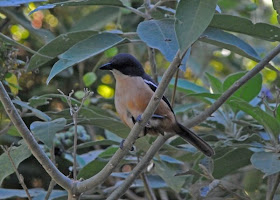 We also saw Olive Thrush in this area and a stop at a raptor watch point proved succesful when Callan 'ticked' African Sea Eagle for his Kirstenbosch list - running up the road and through an ope ngate to ensure he was'in' Kirstenbosch. Whilst searching for the elusive warbler we also found a pair of equally elusive Lemon Doves whilst Forest Canary and an African Monarch Butterfly provided photographic interest.
 Lunch with Callan and visiting Haiwaian birder Anna gave us time to catch up on the resident Spotted Eagle Owls and another good local bird - Olive Pigeon (now renamed Rameroon Pigeon).
 With Callan out of time we decided to head for the (in)famous Strandfontein Sewage Works - a site just like the sewage works of old in the UK with huge attenuation ponds full of wildfowl & waders surrounded by extensive reedbeds. Finding the site was quite diffcult - we could smell it but struggled ot find the right road, Eventually we arrived and were treated to a host of new birds. African Marsh Harriers quartered the reedbeds whislt African Reed Warblers proved to be as frustratingly elusive as their European counterparts. Lavallients Cisticolla was a good find but the star birds were the ones in or on the water - Cape Teal, Southern Pochard, B N Grebes, B W Stilts, Maccoa Duck, Purple Galinu, Red-knoobed Coot, Greater Flamingo, White Pelican, Cattle Egret, Night Heron & Black-headed Heron all vied for our attention. The most unusual bird though was a 'wintering' European Barn Swallow.
 With the light fading we had time to check one more reed fringed pond and struck lucky with one of our target birds - African Black Crake.
 Unfortunatley we didn't have time to return to this site but even in a short trip we managed an impressive list of new birds. The next installment of our trip report will include shots of the one bird I really wanted to see - the legendary Cape Rockjumper. There would have been some serious sulking going on if we hadn't seen this local endemic!!!
 The commonest birds in the area were sacred Ibis along with Black Oystercatcher but small numbers of Swift Terns made the odd landfall before departing out to sea on another fishing foray.


 Meanwhile the tour Bestuurder was doing what comes naturally.......................


